

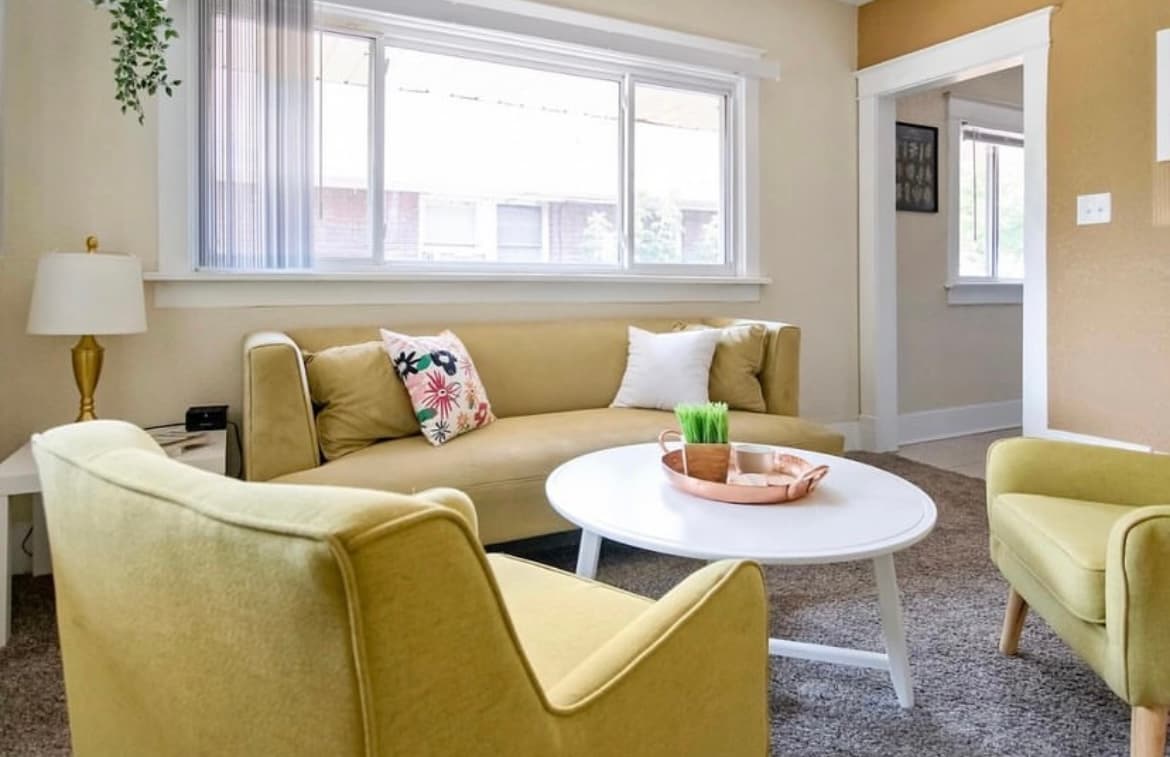
If you've furnished a vacation rental before, you probably found guidance telling you to get a stylish couch for good photos, lots of towels so you'd have plenty to swap out between guests, and to furnish the rental with thoughtful extras for a curated experience. That guidance works (and we followed it when we were Airbnb hosts, too), but it doesn't fully apply to all kinds of rentals.
Furnishing a midterm rental looks a bit different because your guests aren't staying for a weekend or a few days; they're living there for a month, six months, or even longer, which means they'll cook real meals, work from the kitchen table, unpack everything they brought, and settle into this temporary home.
This changes what is worth buying and where to shop, which is where this blog comes in.
Shout out to Nikki, a wonderful clinician we met at TravCon 2026, who asked us questions that led to this blog post!
What changes when you furnish for a month instead of a weekend
A short-term rental is built around first impressions and a few nights to impress a guest, which means the emphasis is on a curated experience where the photos, decor, and welcome details do much of the work.
A midterm rental is built around daily life and a comfortable experience that lasts for months. Someone staying for three months will notice a wobbly desk chair or an uncomfortable bed far more than they'll notice decorative throw pillows or trinkets on the shelves.
For example: a travel nurse working night shifts needs blackout curtains much more than an aesthetically pleasing bookshelf, and a remote worker will care about the desk and the wifi more than if there is a theme to the wall art. Knowing who is likely to book your place (opens in new tab) shapes the list more than any design trend will.
The other big difference? Wear and tear. Over months of everyday use, furniture gets bumped, sat on, and moved around far more than it would in a vacation rental with a cleaning between every guest. That's a big part of why secondhand and discounted pieces make so much more sense for midterm rentals, and knowing where to find them can significantly affect the price (we'll dive into that soon).
Must-haves for a midterm rental
These are things a renter living in your place for a few months will expect to find when they arrive. If your rental covers all of them, you're in great shape!
Safety essentials
Start here. Every midterm rental should have working smoke alarms and carbon monoxide alarms, plus a fire extinguisher in or near the kitchen. The CDC recommends (opens in new tab) installing carbon monoxide detectors near every sleeping area and replacing them every five years or as the manufacturer instructs. Many states and cities also have their own alarm requirements for rentals, which can depend on things like whether the home has gas appliances, so it's worth checking the rules where your property is.
The bedroom
- A good mattress with a mattress protector
- Two sets of sheets, plus pillows and a duvet or comforter, so there's always a clean set whjile the other is in the wash
- Blackout curtains or blinds, which are important for anyone working night shifts
- A dresser or closet space with plenty of hangers, since your renter will be unpacking for months
- A nightstand and lamp on each side of the bed
The kitchen
A midterm renter cooks, so the kitchen needs to handle real meals rather than reheated takeout.
- A working fridge, stove, oven, and microwave
- A few pots and pans in different sizes, plus a baking sheet
- A sharp knife, a cutting board, and basic cooking utensils
- Plates, bowls, glasses, mugs, and silverware for at least as many people as the home sleeps, plus a couple extra
- A coffee maker and a toaster
- Dish soap, a sponge, dish towels, and a trash can
A place to work
Remote work is common among midterm renters, and plenty of travel nurses and students need somewhere to study, use their computer, or take a video call. A real desk and a comfortable chair, close to an outlet and with decent light, go a long way too. So does reliable and fast wifi. If you're including internet in the rent, it's worth running a speed test yourself too.
Living area, bathroom, laundry
- Seating for at least as many people as the home sleeps, a TV, and a coffee table or side table
- Two sets of towels per person, a bath mat, and a shower curtain and liner
- Laundry in the unit or easy access to it on-site (or recommended local laundromats), plus a laundry basket and an iron or steamer
- A vacuum, broom, mop, and basic cleaning supplies so renters can keep the place tidy
Nice-to-haves that help your listing stand out
Once the essentials are covered, these are the details that make a place feel more like home. They can also help your listing stand out when a renter is comparing a few options side by side.
- A smart lock or keypad, so check-in doesn't depend on handing off keys
- A smart TV that renters can sign into with their own streaming accounts
- An extra set of linens and towels stored in a closet
- A second workspace for couples who both work from home
- Outdoor furniture for a patio or balcony
- Pet-friendly touches, like a washable throw for the couch if you welcome pets
- A few plants, prints, or decor pieces that make the space feel lived in
- A simple welcome guide with the wifi password, trash days, and your favorite local spots
None of these are required, and you don't have to add them all at once, but a few well-chosen extras usually do more than a long list of small ones.
Where to buy furniture for a midterm rental
This is where I'm giving you tips to save you the big bucks. Since a midterm rental is used daily for months at a time, furniture will pick up some scuffs no matter how careful your renters are. And truthfully, that's normal and to be expected, and is why you shouldn't fill the place with brand-new, full-price pieces you'd be upset to see scratched.
Secondhand and discounted furniture can hold up just as well when it's in good condition, and it often costs a fraction of the retail price. It's also far less painful to replace when something eventually wears out.
Facebook Marketplace
Marketplace is one of the easiest ways to furnish a rental on a budget, especially for bigger pieces like dressers, dining tables, desks, and bookshelves. Ask anyone who has moved into their own place for the first time and had to stick to a budget, and they'll sing Marketplace's praises.
When people are moving, they often sell sturdy furniture quickly and cheaply because they need it gone. Check a few times a week, since good pieces tend to go fast, and ask for close-up photos (and even videos) of any wear before you drive out to pick something up.
Yard and estate sales
Yard sales are great for the smaller things that add up quickly, like lamps, mirrors, kitchenware, and side tables. Estate sales can be even better for furniture, since they often sell a whole home's worth of well-made pieces at once, and prices often drop on the last day of the sale. If you don't want to drive around and look for handwritten signs on where to shop, you can check Facebook Marketplace for postings about yard and estate sales, and even join community yard and estate sale pages.
Scratch-and-dent stores
Scratch-and-dent sections and stores sell new furniture and appliances with small cosmetic flaws, like a dinged corner or a scuff on one side, at pretty good discounts. That's a great fit for a rental because you're getting brand-new pieces where the first scratch has already happened. Appliance scratch-and-dent is worth checking too if you need a washer, dryer, or fridge, since a dent on a side panel won't matter once it's pushed against a wall. And to be honest? I doubt anyone will dislike their stay because the fridge is dented on the front.
Local furniture outlets and liquidation stores
Many areas have local furniture outlets or liquidation stores that sell brand-new overstock from larger retailers like Ashley, often well below the original price. They're a great option for sofas, bed frames, and dining sets, where you want something new and sturdy without paying full retail. Inventory changes often, so it helps to check back regularly or ask when new shipments arrive.
What's worth buying new
There are a few things worth buying new, even on a tight budget. Mattresses and pillows are the big ones, since they're personal and hard to clean thoroughly, and a new mattress with a protector is something renters notice and appreciate. Safety equipment, such as smoke and carbon monoxide detectors, should be new as well. And to still save some cash, we recommend shopping at Costco for many of these items, as well as smaller items like towels, dish sets, and even TVs.
Also, for any upholstered piece you buy secondhand, like a couch or an armchair, look closely at the seams and under cushions for any signs of pests before you bring it home.
You don't have to furnish everything at once
Furnishing a midterm rental can feel like a big upfront cost, especially if you're converting a vacation rental (opens in new tab) or starting from an empty unit. It's easy to assume you need a fully styled home before you can list it.
But, you don't. Starting with the must-haves and buying secondhand wherever it makes sense keeps that first round of costs down, and you can add the nice-to-haves over time as you learn what your renters use and ask about. A comfortable, practical home that's ready for everyday life is what midterm renters are looking for, and it's what helps keep a place booked month after month.
List your furnished (or unfurnished) rental on MatchBook
Once your place is ready, listing on MatchBook (opens in new tab) and using our platform is completely free, with no commissions and no limit on how many properties you can list. Your listing reaches renters looking for stays of one to 12 months, and screenign, lease signing, messaging, calendar syncing, and scheduled rent payments are all built in. If you're just getting started, our guide to setting up a midterm rental (opens in new tab) walks through pricing and figuring out demand in your are.
List your property (opens in new tab)
Frequently asked questions
How much does it cost to furnish a midterm rental?
It depends a lot on the size of the place, your local market, and how much you buy secondhand. Buying used and discounted pieces for most of the furniture, and buying new only for things like mattresses and safety equipment, can bring the total down considerably compared with furnishing everything new.
Do I need to include utilities and internet?
You don't have to, but many midterm rentals bundle utilities and internet into one monthly price, and renters on shorter stays often expect it. If you include them, say so clearly in your listing. If you don't, explain what renters will need to set up themselves.
Can I list a midterm rental unfurnished?
Yes! On MatchBook, you can list a rental furnished or unfurnished. Unfurnished homes are especially common for longer stays, since renters relocating for 8 months or more may want to bring their own furniture.
Should I furnish differently for travel nurses?
A little. [Travel nurses](https://e leaving Claude to visit an external link: https://matchbookrentals.com/articles/travel-nurse-housing-finding-monthly-rentals-near-hospitals) often work long or overnight shifts, so blackout curtains and a. quiet, comfortable bedroom matter a lot. A full kitchen helps with meal prep around a 12-hour schedule, and parking close to the door is always appreciated.
What should I leave out?
Skip anything fragile or sentimental, as well as expensive decor you'd be upset to see damaged. A midterm rental gets lived in, so durable pieces that are easy to clean or replace will serve you much better over time.